
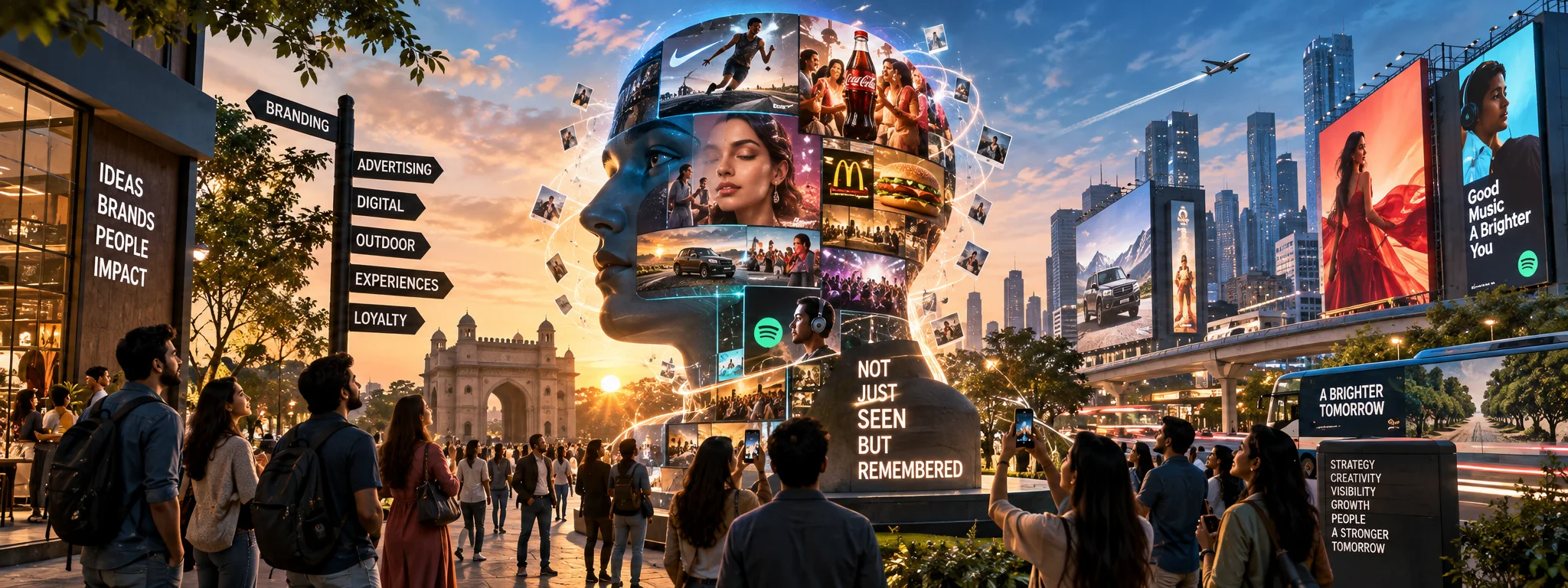
THE ART OF BEING REMEMBERED
In a world fighting for attention, being seen is easy. The real challenge is being remembered. Discover how great brands turn attention into lasting impact.
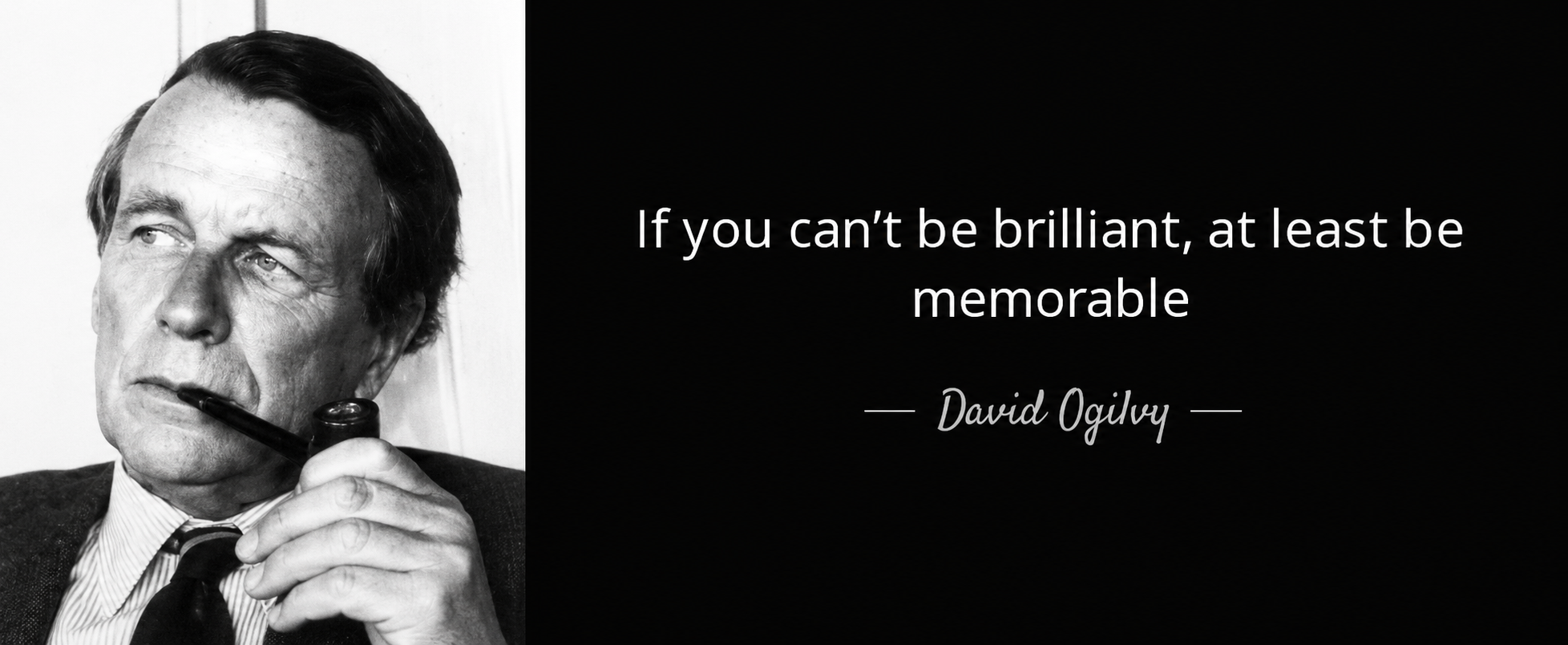
David Ogilvy’s famous line captures something fundamental about marketing: in a world where everyone is fighting to be noticed, being remembered is the real victory. Every day, people pass hundreds of brands, messages, advertisements and signs without giving them a second thought. A few, however, manage to stay with us – sometimes for years. What makes those brands different? Why do some disappear the moment we look away, while others quietly find a permanent place in our minds? The answer lies in marketing – not merely in what a business sells, but in what it makes people feel, remember and ultimately choose.
We see thousands of advertisements. Most disappear before we have even finished looking at them. A few make us stop. Fewer make us remember the brand. And once in a while, something becomes so deeply embedded in culture that years later, someone can say only three words – and millions of people know exactly what they mean. Just Do It. Share a Coke. Real Beauty. The Man Your Man Could Smell Like. These are not merely advertising lines. They are pieces of memory. And that is where marketing becomes far more interesting than advertising. Because marketing is not really about putting a message in front of people. It is about creating a place for a brand inside the mind.
The Business That Nobody Notices
Imagine two businesses opening on the same street. Both have good products. Both have competent people. Both charge reasonable prices. Both have websites. Both are convinced they are different. But one shopfront is difficult to recognise. Its entrance says very little. Its sign is poorly proportioned. Its colours change from one communication to another. Its social media looks unrelated to its physical presence. The other business is immediately recognisable. You see its name from a distance. Its colours feel familiar. Its entrance looks deliberate. Its packaging carries the same personality. Its employees, website, signage and advertisements seem to belong to the same world. Neither business has necessarily built the better product. But one has built something extraordinarily valuable: recognition. And recognition reduces hesitation. When people recognise you, they do not have to begin the decision from zero. That is one of marketing's quietest powers.
So, What Exactly Is Marketing?
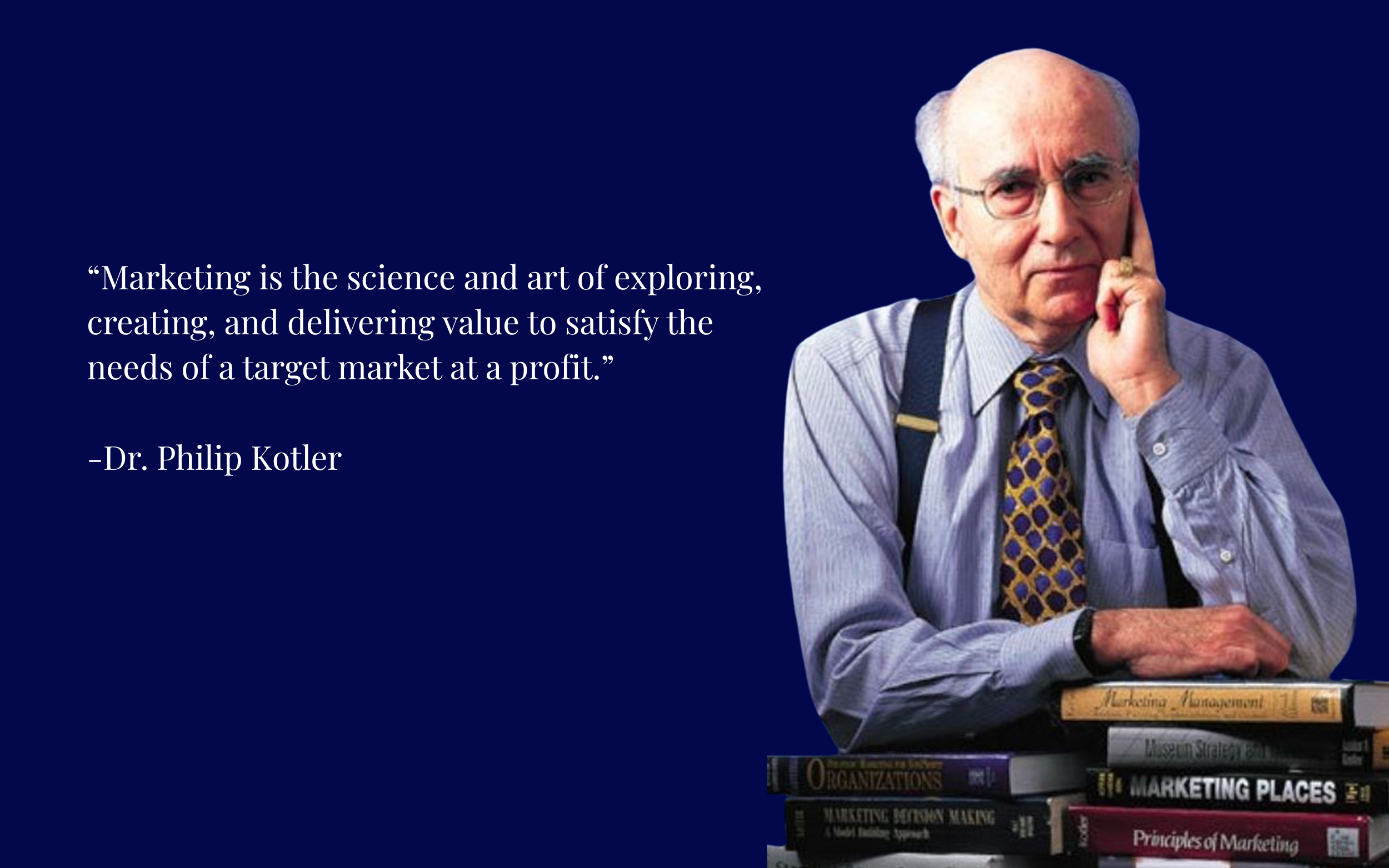
That sounds academic. In real life, it is much more human. Marketing asks : Who are you trying to reach? What do they need, fear, desire or value? What problem can you solve? Why should they believe you? Why should they choose you instead of everyone else? And perhaps the most important question: Why should they remember you tomorrow? That last question separates ordinary promotion from extraordinary marketing.
Marketing Is Not Advertising
This distinction matters. 'Marketing' is the larger system. 'Advertising' is one of its tools. 'Branding' shapes the identity and meaning associated with the business. 'Sales' converts interest into transactions. 'Public relations' earns attention and manages reputation. 'Content marketing' attracts people through entertaining or meaningful information. 'Digital marketing' uses digital channels to reach, influence and retain audiences. 'Experiential marketing' allows people to know a brand rather than simply hear about it. And outdoor marketing places the brand directly into the physical environment where people live, travel, work and make decisions. A billboard can advertise. A shopfront can market. A vehicle can market. A package can market. A reception area can market. A sign outside a hospital can reassure. A wayfinding system can communicate competence. A beautifully branded building can tell a customer, before a single employee speaks, "You are in the right place.”** Marketing therefore begins long before the advertisement. And it continues long after the sale.
The Four Questions Behind Almost Every Great Marketing Strategy
1. Who?
Who exactly are we speaking to? Not everyone. A young professional and a retired industrialist do not necessarily respond to the same message. A first-time buyer and a loyal customer may need completely different reasons to act. The clearer the audience, the sharper the communication.
2. What?
What problem are we solving? People do not always buy products for their functional qualities. They buy convenience. Confidence. Belonging. Status. Safety. Beauty. Speed. Recognition. Sometimes they buy a feeling.
3. Why?
Why should they choose us? This is your value proposition – the reason your offering deserves attention over competing alternatives.
4. Believe?
Why should anyone believe your promise? That is where proof enters. Experience. Reviews. Results. Testimonials. Awards. Demonstrations. Consistency. Reputation. A promise attracts attention. Proof earns trust.
The 4 Ps: The Skeleton of Marketing
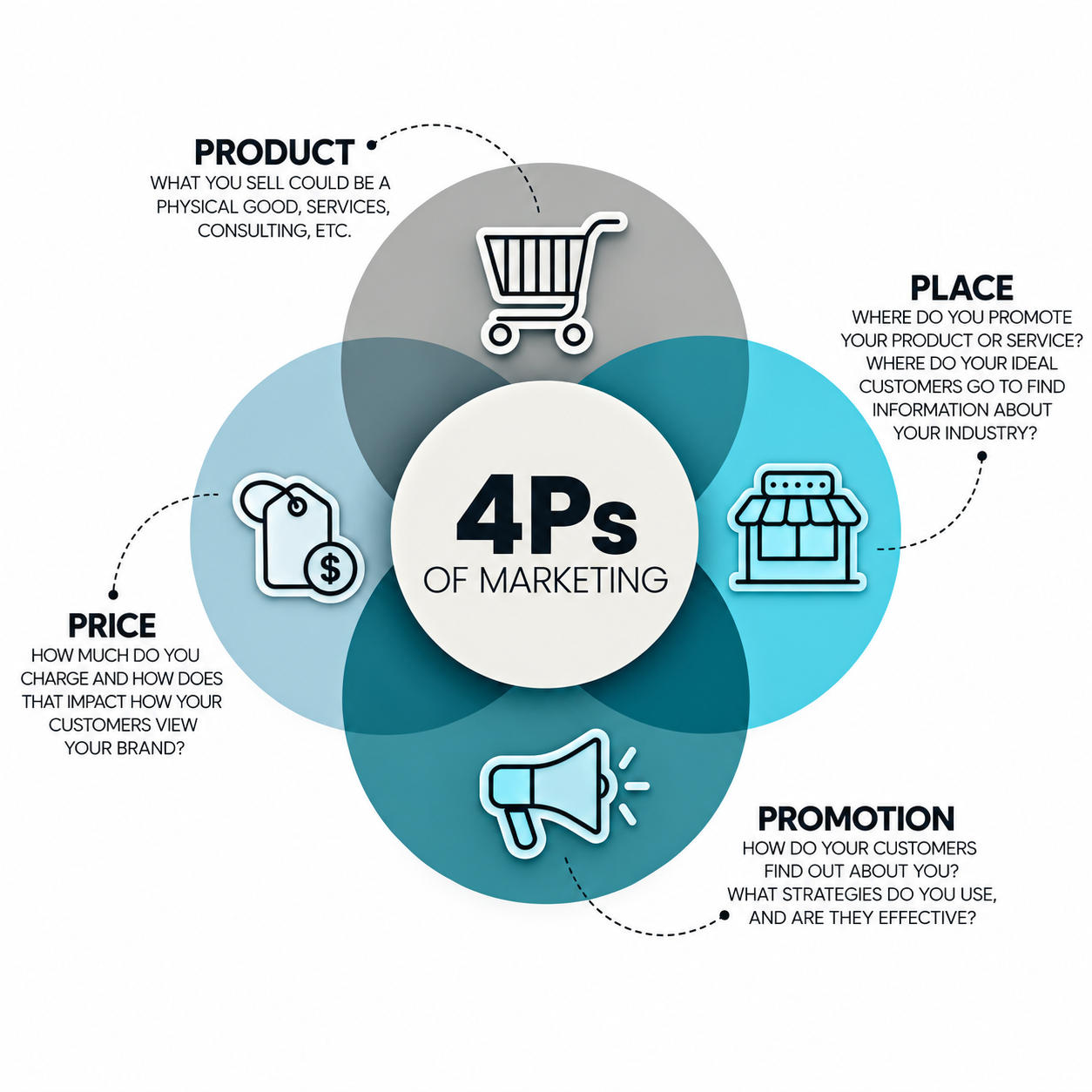
What are you offering? How much does it cost? Where can people find or purchase it? How will they hear about it? For services, this framework is often expanded into the 7 Ps: Product, Price, Place, Promotion, People, Process and Physical Evidence.
Positioning: The Battle for a Few Inches of the Mind
Say: “Search engine.” A name probably appears immediately. Say: “Luxury smartphone.” Another name appears. Say: “Sports shoes.” Another. That is positioning. Positioning is the place a brand occupies in the customer's mind relative to alternatives. And the mind is crowded. You may have 500 things you want people to know about your company. Your customer may remember three. Perhaps one. That is why great marketing does not necessarily say more. It makes the right thing easier to remember.
Then Something Strange Happens: People Stop Buying Products
They start buying meanings. Consider Nike. A shoe is a shoe. Rubber, fabric, foam, engineering and design. But Nike rarely built its cultural power by talking only about rubber and foam. In 1988, Nike introduced “Just Do It".
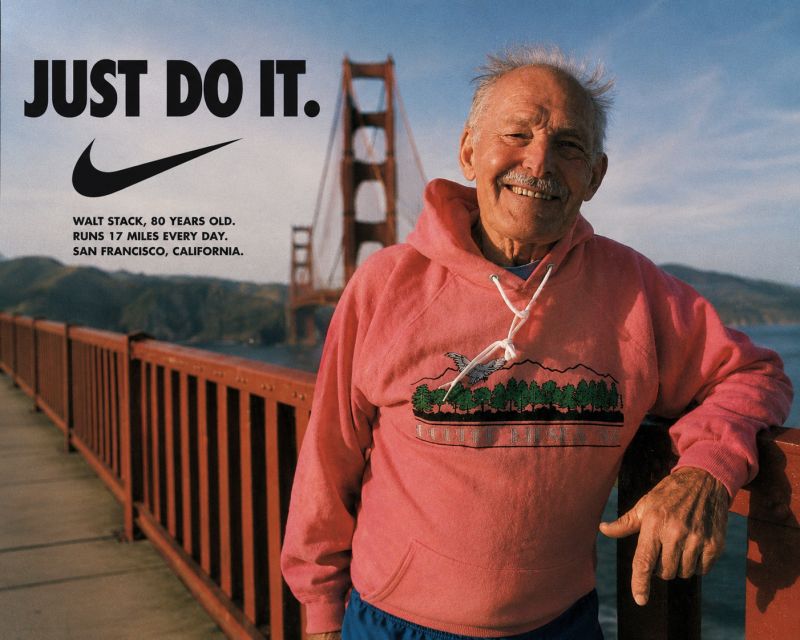
The original campaign included an 80-year-old runner, Walt Stack, running across San Francisco's Golden Gate Bridge. The message was larger than athletic performance: sport belonged to ordinary people too. Over the following decades, the idea became associated with athletes including Michael Jordan, Serena Williams and Kobe Bryant. Nike could have spent decades telling people: Our shoes are technically excellent. Instead, it repeatedly told them something more powerful: You are capable of more. The shoe became part of an identity. And identity is difficult to compete against. Because competitors can copy a product feature. They cannot easily copy the place a brand has earned inside someone's sense of self.
Coca-Cola Did Something Almost Ridiculously Simple
In Australia, Coca-Cola faced a familiar problem. The brand was enormous. And when a brand becomes enormous, something dangerous can happen. It becomes familiar. And familiarity can quietly become invisibility. In 2011, Coca-Cola Australia launched 'Share a Coke.'
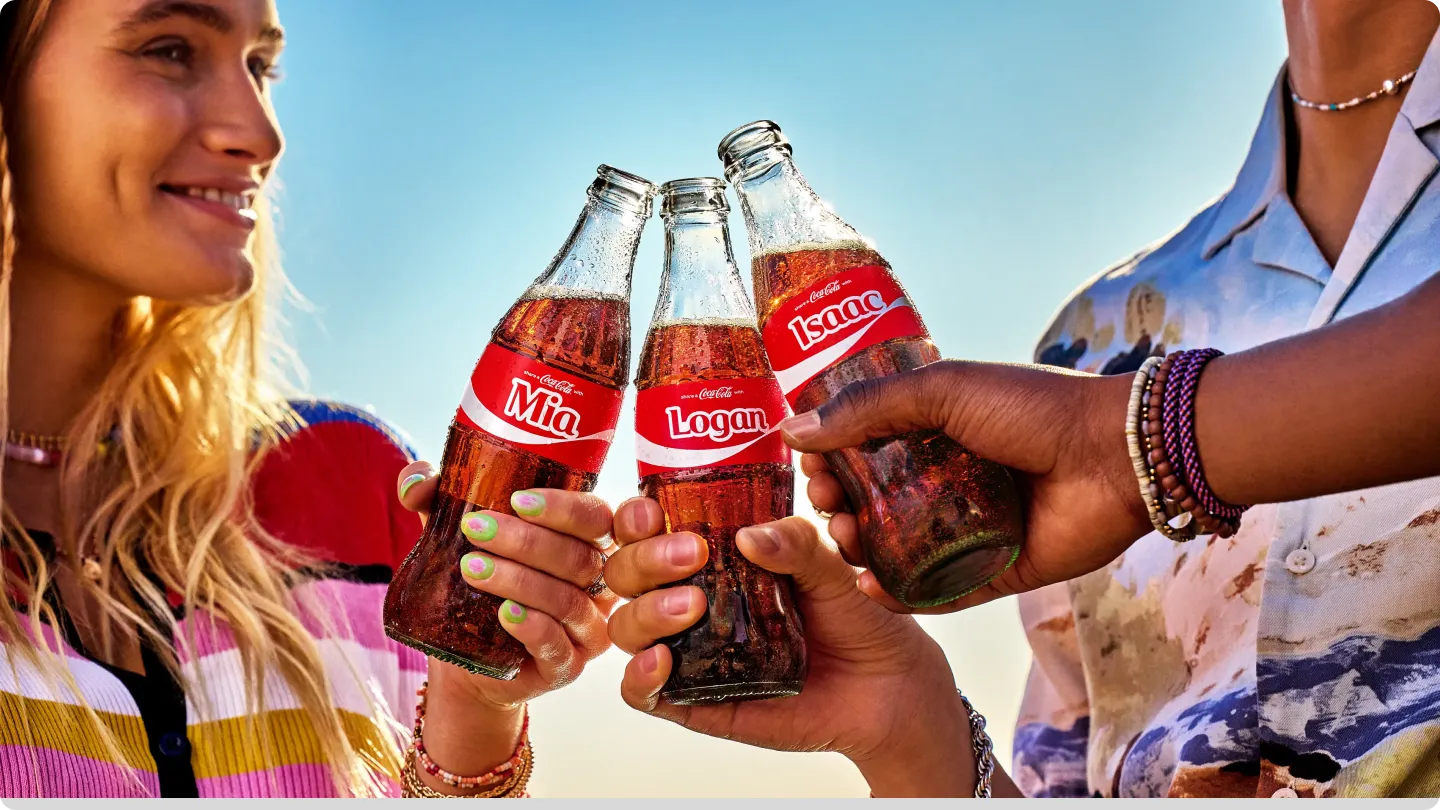
Instead of putting only the Coca-Cola name on bottles and cans, it replaced the branding with popular first names. Suddenly, the question was no longer: “Would you like a Coke?” It became: “Have you found your name?” The first Australian campaign sold more than 250 million named bottles and cans in a country of fewer than 23 million people, and the idea subsequently travelled to more than 70 countries. The brilliance was not merely personalisation. It was participation. People searched for names. They photographed bottles. They gave them to friends. They bought them for people they missed. The campaign became something people could do, not merely something they could watch. Coca-Cola later brought the idea back for a new generation in 2025, explicitly combining personalisation with digital and real-world experiences. That tells us something important: A great campaign does not always ask people to listen. Sometimes it gives them something they want to play with.
Spotify Turned Data Into a Mirror
Every December, millions of people willingly advertise Spotify for free. Why? Because Spotify Wrapped does something brilliant. It tells people about themselves. Your most-played artist. Your favourite song. Your listening personality. Your strange musical habits. Suddenly, private behavioural data becomes something worth showing friends. The customer becomes the content. And the campaign becomes a cultural ritual.
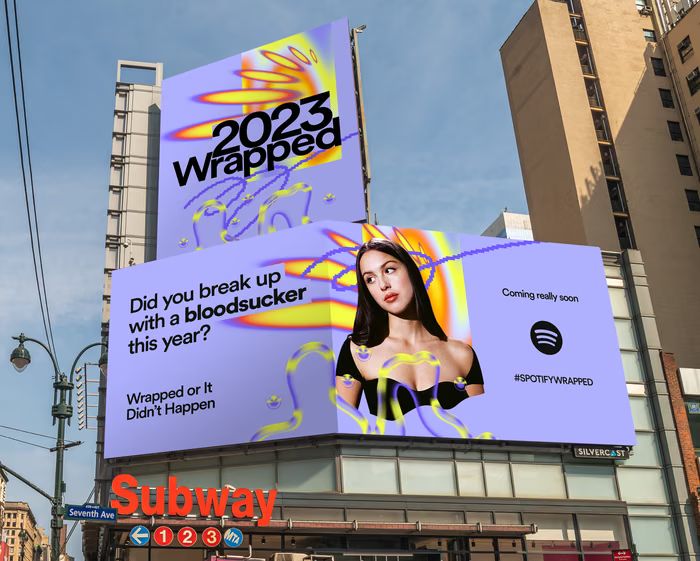
That is one of the most powerful ideas in modern marketing: Give people something they are proud, amused or curious enough to share.
And India Has Been Doing This Brilliantly Too
Sometimes the greatest marketing lesson is sitting right in front of us. Take Fevicol. The product is adhesive. Not exactly the category you'd expect to become a cultural institution. Yet Fevicol built its advertising around something everyone immediately understood: strength. Its early advertising established the functional strength of the adhesive, but the brand's communication evolved toward humorous real-life situations. Pidilite records Fevicol's first campaigns in the 1980s and its later recognition, including a Gold Effie for Best Ongoing Campaign in 2012.
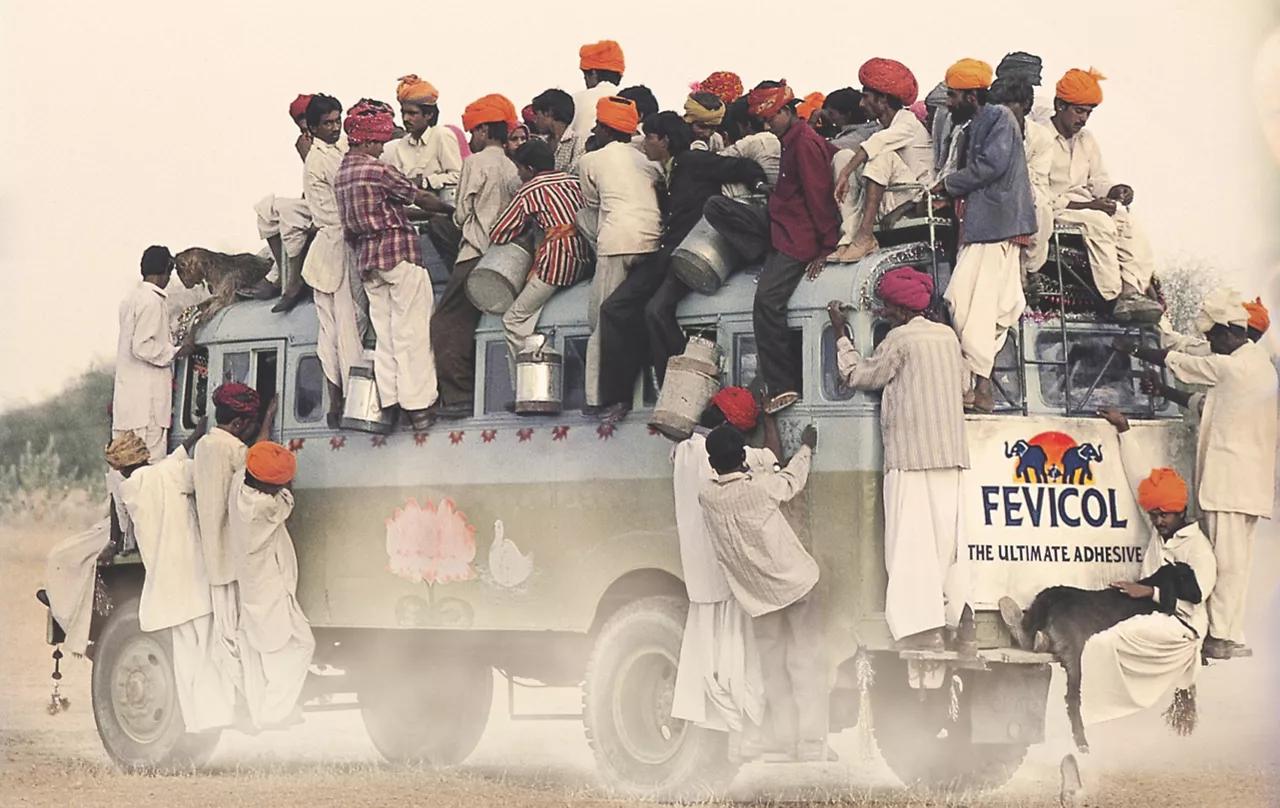
Fevicol understood something extraordinary: a technical product benefit is difficult to remember. A funny story demonstrating that benefit is not. The adhesive became the punchline. The punchline became memory. The memory became the brand. And the brand became part of Indian popular culture. Even today, Pidilite continues extending the Fevicol language into new campaigns and formats.
What Do Nike, Coca-Cola, Dove, Spotify and Fevicol Have in Common?
Their products are completely different. Their audiences are different. Their countries are different. Their campaigns are different. Yet they share one remarkable characteristic: They found a human truth. Nike found ambition. Coca-Cola found a connection. Spotify found self-expression. Fevicol found humour in a functional benefit. The advertisement came afterwards. The idea came first. That is where many businesses get marketing backwards. They ask:“What advertisement should we make?” The better question is: “What truth about our customer deserves to be said?”
The Psychology of Being Remembered
Human beings do not process every message equally. We ignore most of what surrounds us. We notice what is relevant. We remember what is distinctive. We repeat what is emotionally meaningful. That is why certain psychological principles repeatedly appear in powerful marketing. Familiarity: Repeated exposure can make a brand feel easier and safer to choose. Social proof: If everyone seems to trust something, uncertainty falls. Scarcity: Limited availability can increase perceived urgency. FOMO: People don't want to discover that everyone else experienced something without them. Storytelling: A story gives information structure and emotion. Identity: People often choose brands that reinforce how they see themselves—or how they wish to see themselves. Emotion: Joy, humour, nostalgia, fear, pride and aspiration can make messages more memorable. None of these principles is a substitute for a good product. They are amplifiers. Good marketing cannot permanently rescue a bad experience. But a good experience with bad marketing can remain invisible for far too long.
What Is Great Marketing?
It is not the loudest advertisement. It is not necessarily the largest budget. It does not have the most followers. It is not the most expensive celebrity. It is not the most sophisticated marketing vocabulary. Great marketing is when a business understands something about people so deeply that the message feels almost personal. It makes someone stop. Then care. Then remember. Then trust. Then choose. And, ideally, tell somebody else. That is the journey. Attention → Relevance → Emotion → Trust → Action → Experience → Loyalty → Advocacy. And somewhere along that journey, a brand stops being merely a company. It becomes a name people recognise. A colour they notice. A voice they trust. A place they return to. A story they remember.
The Question Every Business Should Ask
Tomorrow morning, your customer will encounter hundreds of brands. Some will shout. Some will entertain. Some will disappear. Some will be forgotten before lunch. And a few will remain. So perhaps the real question is not: “How much should we spend on marketing?” Perhaps it is: “What should people remember about us when we are no longer in front of them?” Because products can be compared. Prices can be matched. Features can be copied. Advertisements can be imitated. But a meaningful place in someone's memory is much harder to steal. Marketing is not simply the art of selling what you make. It is the art of making people understand why it matters. And in a world overflowing with messages, the brands that matter most will not necessarily be the ones that speak the loudest. They will be the ones people can recognise – even before they read the name. That is marketing. To be seen. To be understood. To be remembered. And finally, to be chosen.

Planning signage of your own?
Get a quote→