
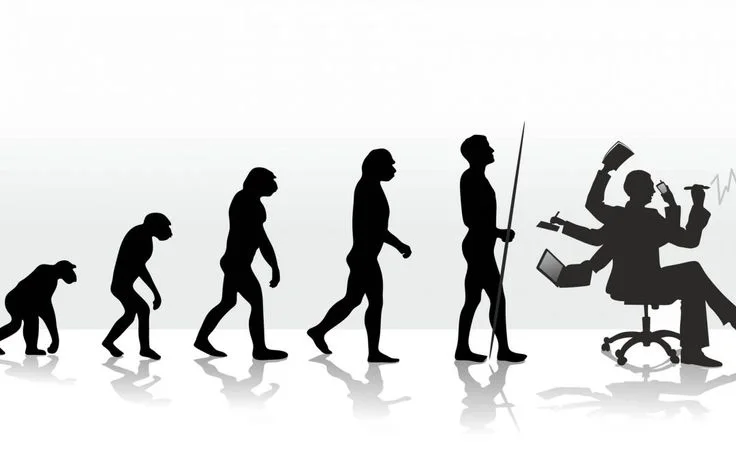
BEFORE GRAPHIC DESIGN HAD A NAME, WE WERE ALREADY DESIGNING
From cave paintings to modern graphics, design has evolved with humanity. Discover the visual journey from ancient marks to wallpapers, canvas and print.
There is a small moment that happens almost every day. You walk into a room and something feels wrong. The furniture is good. The lighting is acceptable. The floor is clean. Nothing is particularly ugly. And yet the room feels empty. In another place, perhaps a café, hotel, office, showroom or home, you walk in and immediately feel that the space has a personality. You cannot always explain why. Perhaps there is a large photograph on the wall. Perhaps the colours are carefully chosen. Perhaps a pattern moves across the surface. Perhaps a painting occupies an entire wall. The difference may be nothing more than an image. We tend to think of such things as decoration. But decoration is only the visible surface of a much older human instinct. We have always wanted to put ideas somewhere. On stone. On walls. On clay. On cloth. On paper. On canvas. On buildings. On posters. On shopfronts. And now, on screens. Long before anyone used the phrase graphic design, human beings were already arranging shapes, colours, symbols and images with intention. The tools were primitive, but the impulse was remarkably sophisticated. A piece of charcoal became a line. A line became a shape. A shape became an animal. An animal became a story. And eventually, those stories became patterns, paintings, books, posters, advertisements, wallpapers, identities and the visual world that surrounds us today. Graphic design did not suddenly appear. It grew out of humanity itself.
THE FIRST CANVAS WAS NOT PAPER
Imagine entering a cave thousands of years ago. There is no electricity. No Photoshop. No printer. No camera. No typography. No carefully calibrated colour system. There is only stone, darkness, firelight and the human hand. Yet on the walls, there are animals. Horses. Deer. Bison. Figures. Handprints. Lines. Symbols.
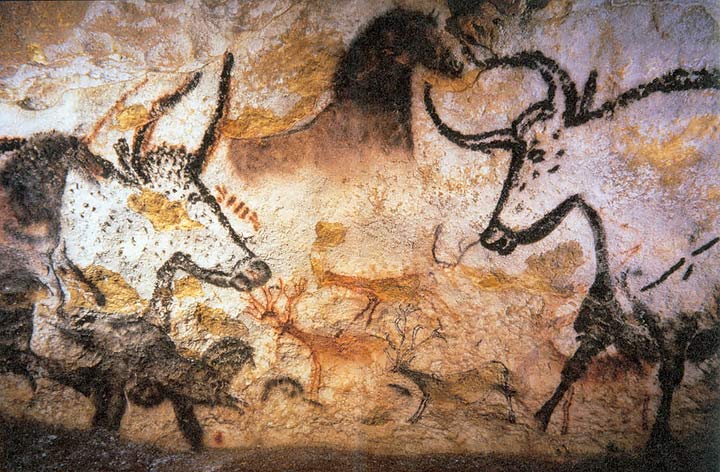
The famous paintings of Lascaux in France, for example, date to roughly 17,000 years ago. The artists worked with the uneven surface of the rock itself, sometimes using the contours of the stone to give their animals a sense of volume and movement. These were not merely pictures in the modern sense. They were attempts to make something absent become present. An animal outside the cave could disappear into the forest. An event could disappear from memory. A person could die. A hunting journey could end. But the image remained. That may be one of the earliest and most important ideas in the history of visual communication: An image can outlive the moment that created it.
INDIA'S WALLS WERE SPEAKING TOO
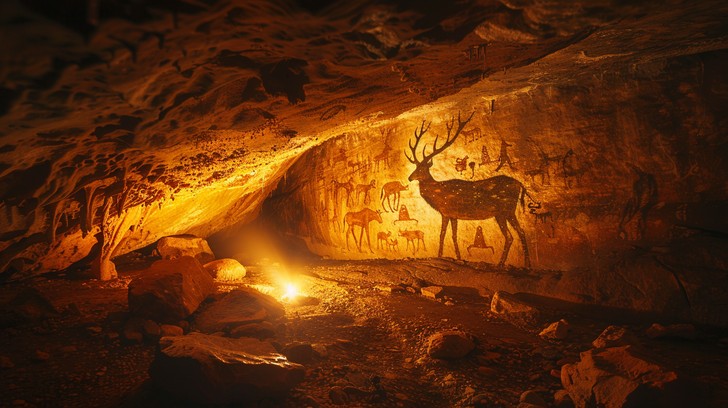
This story is not only European. India possesses an extraordinary visual heritage that stretches across prehistoric rock shelters, Buddhist caves, manuscripts, textiles, miniature paintings, folk traditions, architectural ornament and eventually modern visual communication. At Bhimbetka in Madhya Pradesh, rock shelters contain paintings extending from the Mesolithic period into historical times. UNESCO describes the site as evidence of a long interaction between people and landscape, expressed through the quantity and quality of its rock art.
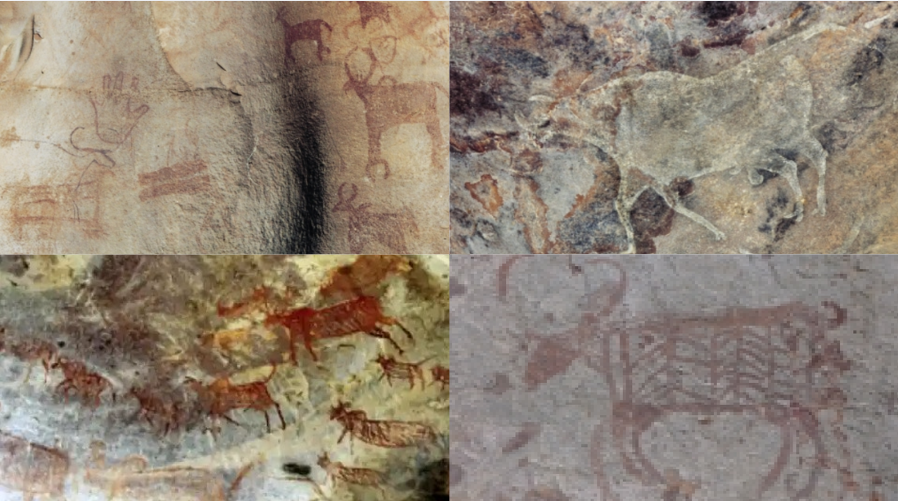
The imagery is striking because it does not merely show isolated objects. There are scenes. Groups of people. Animals. Movement. Hunting. Rituals. Daily life. Some compositions are realistic; others become stylised, geometric or decorative. In other words, the wall became a visual field. That idea would travel a very long distance through history. At Ajanta, paintings developed into sophisticated narrative environments. The caves contain paintings connected with Buddhist stories, including the Jataka tales, with major phases dating from the 2nd century BCE to the 5th century CE. The wall was no longer merely a surface. It had become a place where an entire story could live. This is an important part of India's design heritage because modern visual storytelling often feels like a technological invention. But the Indian tradition of sequential pictorial storytelling goes back thousands of years, from Bhimbetka through Ajanta and beyond. The tools changed. The human instinct did not.
WHEN IMAGES LEARNED TO REPEAT
There is another great invention in the history of design that we often overlook: repetition. One flower is a flower. A hundred flowers arranged in rhythm become a pattern. A single geometric shape is an object. That shape repeated across a surface becomes design. This distinction changed everything. Human beings began to decorate pottery, textiles, architecture, manuscripts, furniture and walls with repeating forms. Patterns could travel from one surface to another. A motif could become associated with a particular culture, craft, region or period. The visual world became increasingly organised. And somewhere inside that organisation, something very close to modern graphic design began to emerge. Because design is not only about making an image. It is about deciding: What belongs here? What should repeat? What should stand out? What should remain quiet? Where should the eye go first?
THEN THE WALL BECAME PAPER
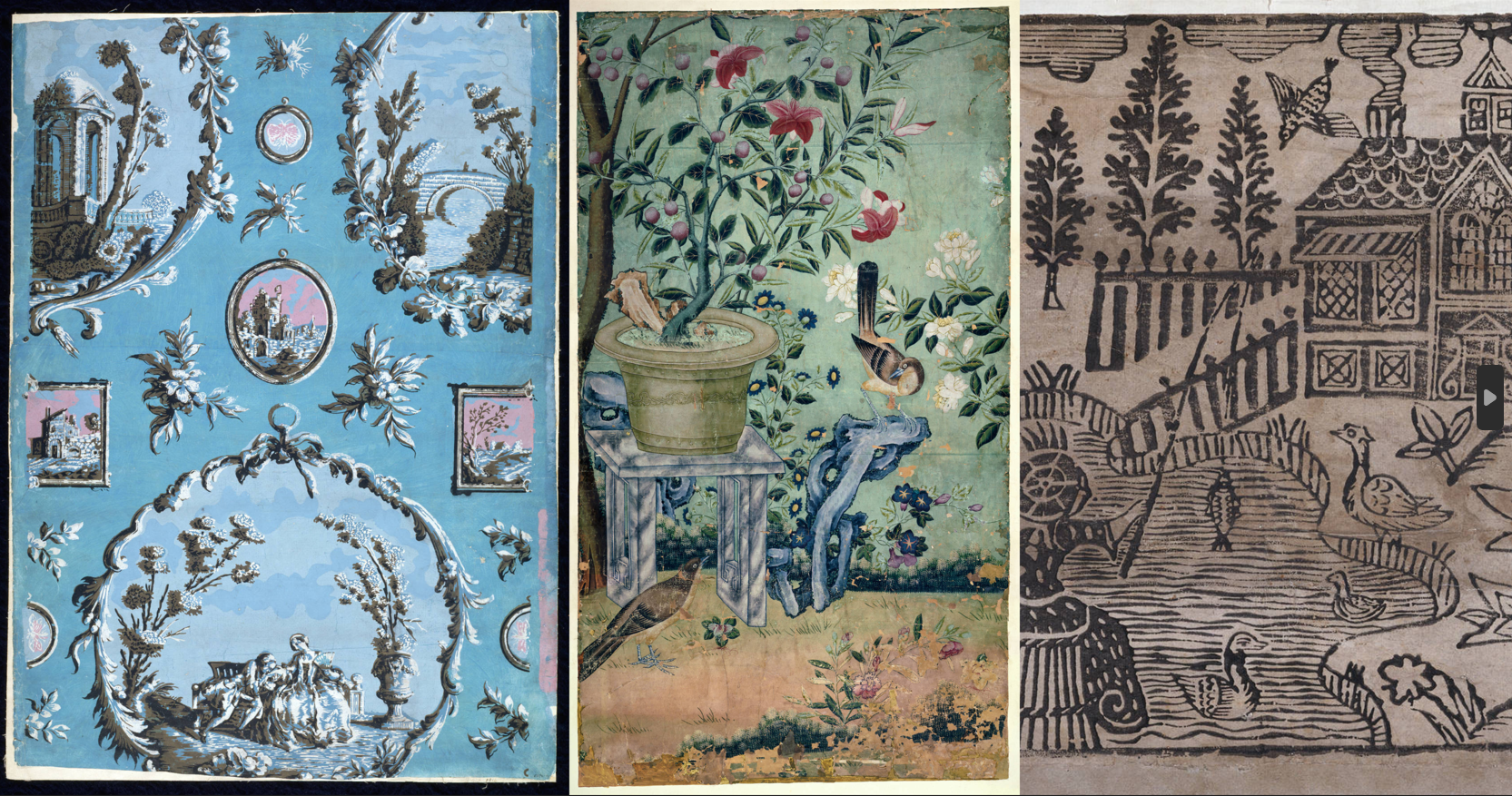
For thousands of years, walls were painted directly. Then came an extraordinary idea: What if the image could be made somewhere else and brought to the wall? This is one of the quiet revolutions in visual history. Wallpaper emerged in Europe during the 16th century, initially used in relatively modest applications such as the interiors of cupboards and smaller rooms. Early wallpapers often borrowed motifs from textiles and embroidery and were printed in monochrome.
The surface of the wall had become portable. And once the image became portable, it could be reproduced. That changed the relationship between art, design and everyday life. A person no longer needed a painter to stand in a room and paint every square metre. A pattern could be prepared. A block could be carved. Ink could be applied. Paper could receive the impression. And suddenly, the same visual language could travel from one place to another.
THEN THE WALL BECAME PAPER
For thousands of years, walls were painted directly. Then came an extraordinary idea: What if the image could be made somewhere else and brought to the wall? This is one of the quiet revolutions in visual history. Wallpaper emerged in Europe during the 16th century, initially used in relatively modest applications such as the interiors of cupboards and smaller rooms. Early wallpapers often borrowed motifs from textiles and embroidery and were printed in monochrome.
The surface of the wall had become portable. And once the image became portable, it could be reproduced. That changed the relationship between art, design and everyday life. A person no longer needed a painter to stand in a room and paint every square metre. A pattern could be prepared. A block could be carved. Ink could be applied. Paper could receive the impression. And suddenly, the same visual language could travel from one place to another.
THE AGE OF THE HAND PRINTED WALL
Early wallpaper printing was painstaking. A design could be carved into a wooden block. The block was inked and pressed onto paper. If the design required several colours, each colour needed its own block and had to be applied separately. Alignment mattered. Pressure mattered. Ink consistency mattered. Drying time mattered. A small mistake could disturb an entire pattern. Think about what that means. Today, we can change a colour with a few clicks. We can duplicate an object instantly. We can enlarge an image without physically redrawing it. We can send a finished design across the world in seconds. The historical printer had none of this. Yet the fundamental question was identical: How do we take an idea and reproduce it faithfully on a physical surface? That question connects the wooden printing block to the modern printing machine. The technology changed dramatically. The problem remained beautifully human.
WHEN WALLPAPER BECAME A MASS MEDIUM
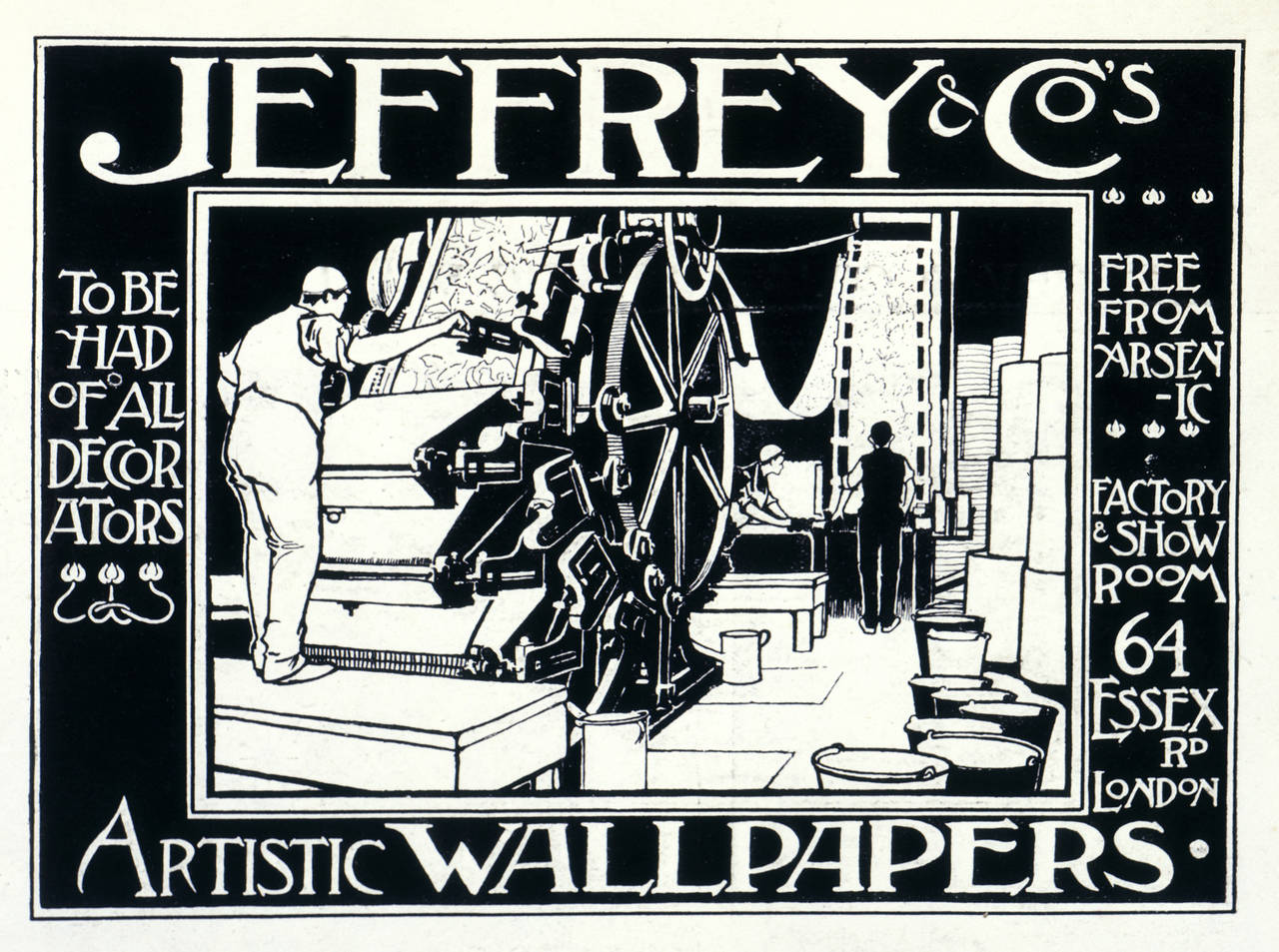
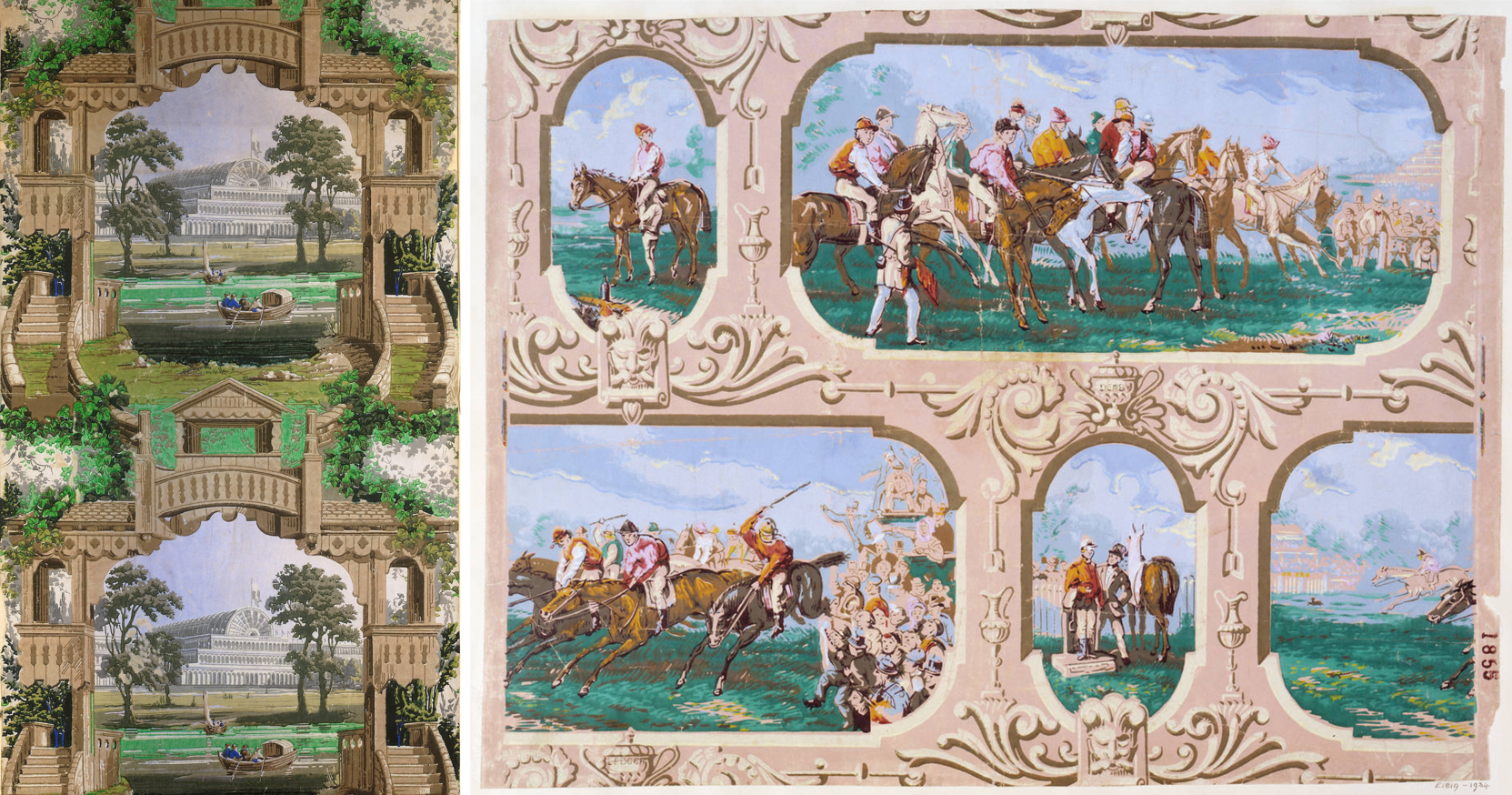
In 1839, the first wallpaper printing machine was patented by Potters & Ross, adapting techniques from textile printing. Instead of relying entirely on hand-operated blocks, machines could transfer patterns using rollers. The consequences were enormous. Production became faster. Prices fell. Patterns became accessible to a much larger public. A visual experience that had once required considerable labour could now be reproduced at an industrial scale. This is one of the recurring stories of design history: Technology does not simply make things faster. It changes who gets to experience them. Printing made visual culture more democratic. The wall that once required an artist could now carry a reproducible image. The book that once required a scribe could be printed. The poster that once needed individual craftsmanship could be produced in quantity. And the visual world began to expand.
THE WALLPAPER WAS NEVER “JUST DECORATION”
This is where the history becomes particularly interesting. Wallpaper reflected changing ideas about taste, wealth, technology and society. Chinese wallpapers became highly fashionable in Europe from the late 17th century. Unlike many European printed wallpapers, these were hand-painted and often composed as large pictorial scenes of landscapes, birds, flowers and everyday life. They could cover an entire room as a continuous visual environment. The wall had become almost cinematic. You could enter a room and enter another world. A garden. A landscape. A distant civilisation. A fantasy. A pattern. A story. The wall was no longer simply something that held up the roof. It had become part of the experience of being inside a place. And that idea is still alive. When someone chooses a dramatic wallpaper for a bedroom, a mural for a café, a photographic wall for a hotel or an artistic print for an office, they are participating in the same long tradition. They are asking an ancient question in a modern language: What should this space make me feel?
FROM PAINTING TO PATTERN & FROM PATTERN TO IDENTITY
The 19th century brought another major transformation. Designers began questioning not only what should be printed but also how design itself should work. The debate became particularly intense around wallpaper. Should a wall imitate nature realistically? Should flowers look three-dimensional? Should patterns remain flat? Should ornament follow the architecture? Should decoration be restrained or elaborate? These were not merely arguments about wallpaper. They were arguments about the purpose of design. The design reform movements of the 19th century increasingly argued for stronger relationships between pattern, surface and structure. Figures such as A. W. N. Pugin and Owen Jones played important roles in these debates.
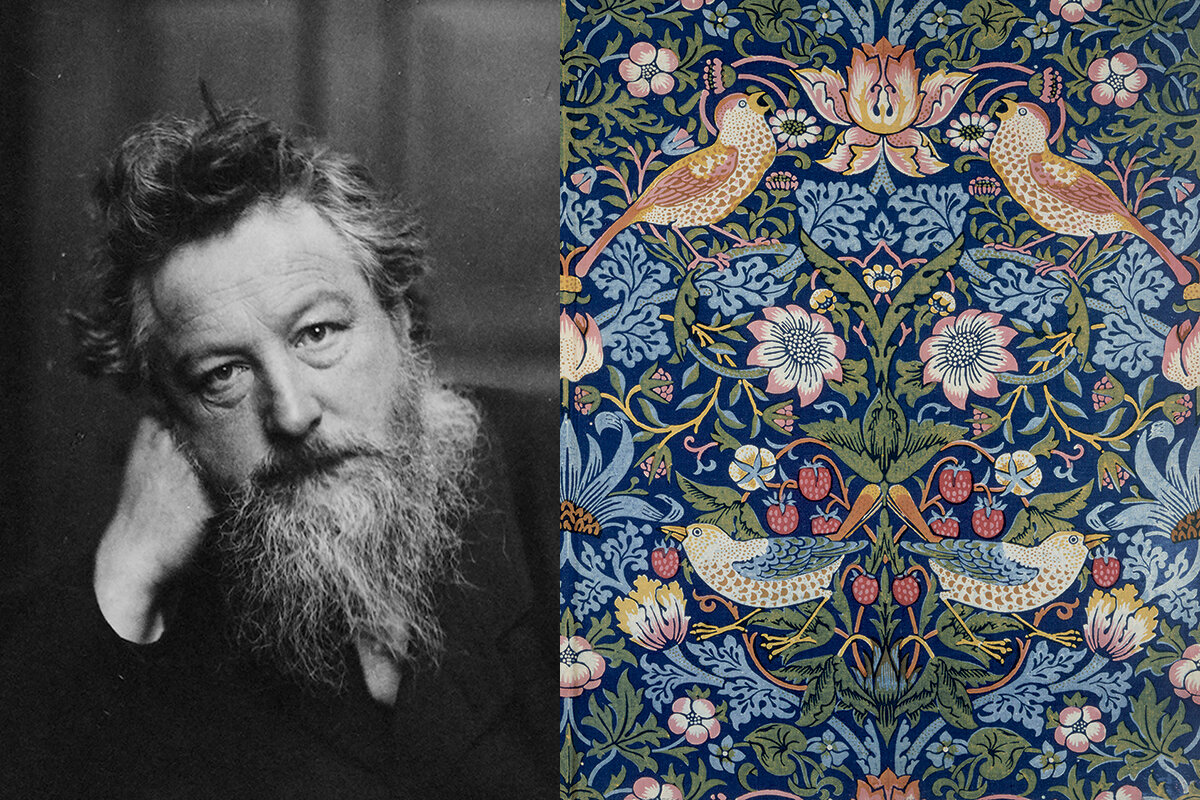
Then came William Morris. Morris understood something that remains relevant today: a pattern does not need to scream to be powerful. His wallpapers used rhythm, repetition, natural forms and carefully balanced compositions. His work became enormously influential and helped create renewed enthusiasm for decorative interiors and patterned surfaces. The flower was no longer simply a flower. It became a system. A visual language. A repeat. A rhythm. A mood. A signature. And that is very close to what modern branding does.
THEN GRAPHIC DESIGN FINALLY GOT A NAME
Here is the historical irony at the centre of our story.
Graphic design is old. The name is relatively young.
The phrase 'graphic design' is commonly associated with American book designer William Addison Dwiggins, who used it in a 1922 article about the changing nature of printing and design. However, historians have since found earlier uses of the phrase, so the story is more complicated than the popular claim that Dwiggins simply “invented” the term.
paulshawletterdesign.com
What matters is not who said the words first. What matters is what was happening around them. Printing had expanded. Advertising had expanded. Books had expanded. Newspapers had expanded. Posters had expanded. Packaging had expanded. Commerce had expanded. Suddenly, there were more things that needed to look right. And someone had to decide how words, pictures, shapes, colours and empty space should live together. That person was no longer simply a painter. Or a printer. Or an illustrator. Or a calligrapher. The work was becoming something broader. Design.
THE 20TH CENTURY TAUGHT DESIGN TO SPEAK FASTER
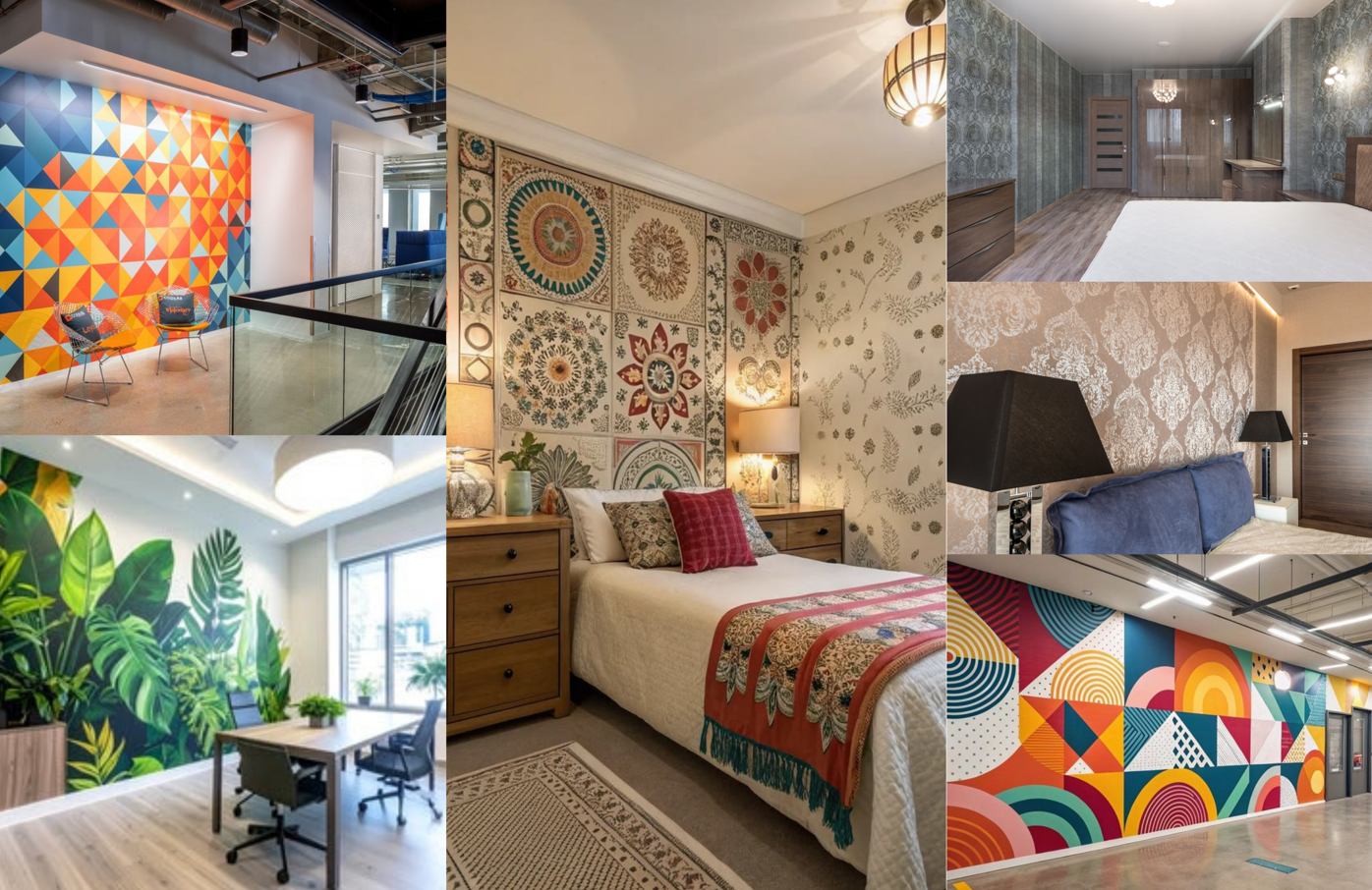
The 20th century accelerated everything. Posters became powerful tools of public communication. Advertising became more sophisticated. Photography entered commercial communication. Typography became experimental. Modernist movements began reducing visual language to geometry, structure, contrast and clarity. The Bauhaus questioned the separation between art, craft and industry. Constructivism explored the power of bold composition and visual persuasion. Art Deco brought geometry, luxury and modernity together. Swiss design later emphasised grids, clarity and disciplined typography. Every movement changed the visual vocabulary available to designers. But beneath all those differences was one common idea: Design could organise attention. A good poster could make you stop. A good package could make you choose. A good sign could make you turn. A good photograph could make you remember. A good layout could make complicated information feel simple. Design was becoming less about making something merely beautiful and more about controlling how an idea is encountered.
THEN THE SCREEN ARRIVED
For most of human history, design had weight. Paper had weight. Canvas had weight. Paint had weight. Wood had weight. Ink had weight. A printed poster could be folded. A painting could be carried. A wallpaper roll could be transported. A sign could be installed. Then the screen changed the rules. Pixels replaced physical pigment. Software replaced many manual processes. A designer could undo a mistake. Copy an image. Change a colour. Test ten layouts. Animate a shape. Send the result instantly. Graphic design became faster, more flexible and more accessible. And eventually, almost everyone became a potential designer. A teenager making a social media post. A restaurant creating a menu. A business building its identity. A photographer editing an image. A company designing a presentation. A creator producing a video thumbnail. The tools became democratic. But something interesting happened. The more digital our world became, the more valuable physical experience began to feel.
FROM CANVAS TO WALLPAPER, FROM VINYL TO FLEX
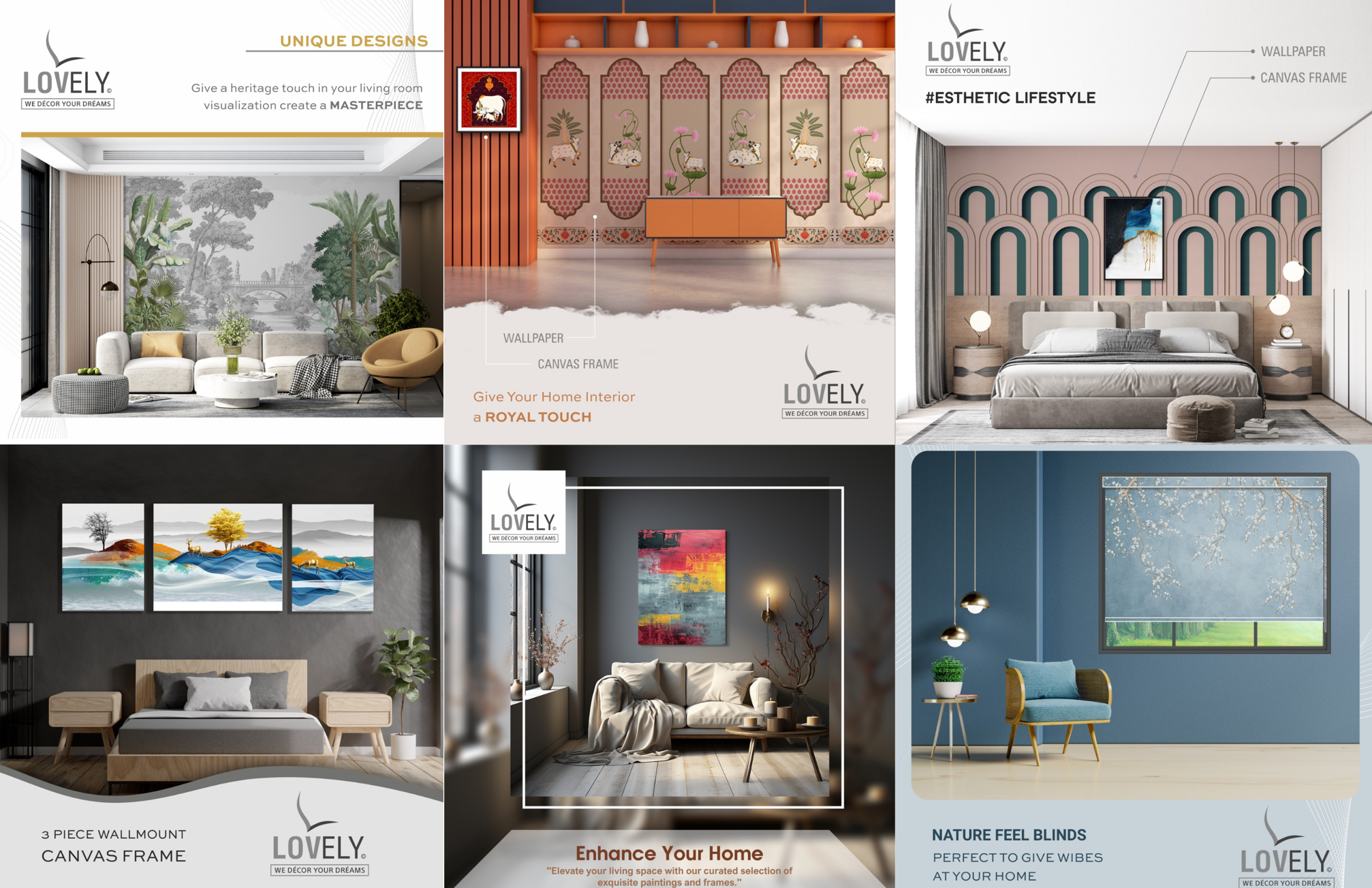
 lovelyfasign.com
This is why modern printing should not be understood merely as a manufacturing process. It is the latest chapter in a much older story. Canvas printing continues the tradition of giving images physical presence. Wallpaper printing continues the tradition of transforming architecture through pattern and imagery. Vinyl printing allows graphics to move onto windows, walls, vehicles and other surfaces. Flex and large-format printing allow ideas to become visible at a scale that earlier designers could scarcely have imagined. The tools are different. The materials are different. The resolution is different. But the basic human intention has hardly changed. Someone still looks at an empty surface and thinks, 'Something should be here.' Something that tells a story. Something that creates an atmosphere. Something that identifies a place. Something that makes people stop. Something that makes people remember.
A FINAL THOUGHT
The next time you enter a room and notice a painting, a wallpaper, a photograph, a mural, a printed wall or even a simple pattern, look at it for a little longer. Ask yourself why it is there. Why that colour? Why that scale? Why that image? Why that position? Why does it make the room feel different? Because behind every successful visual is an ancient human act. Someone imagined something that did not yet exist – and found a way to make it visible. That is where design began. And in one form or another, that is where it will always begin.
"Art must move people; otherwise, it is only decoration."
-M. F. Husain
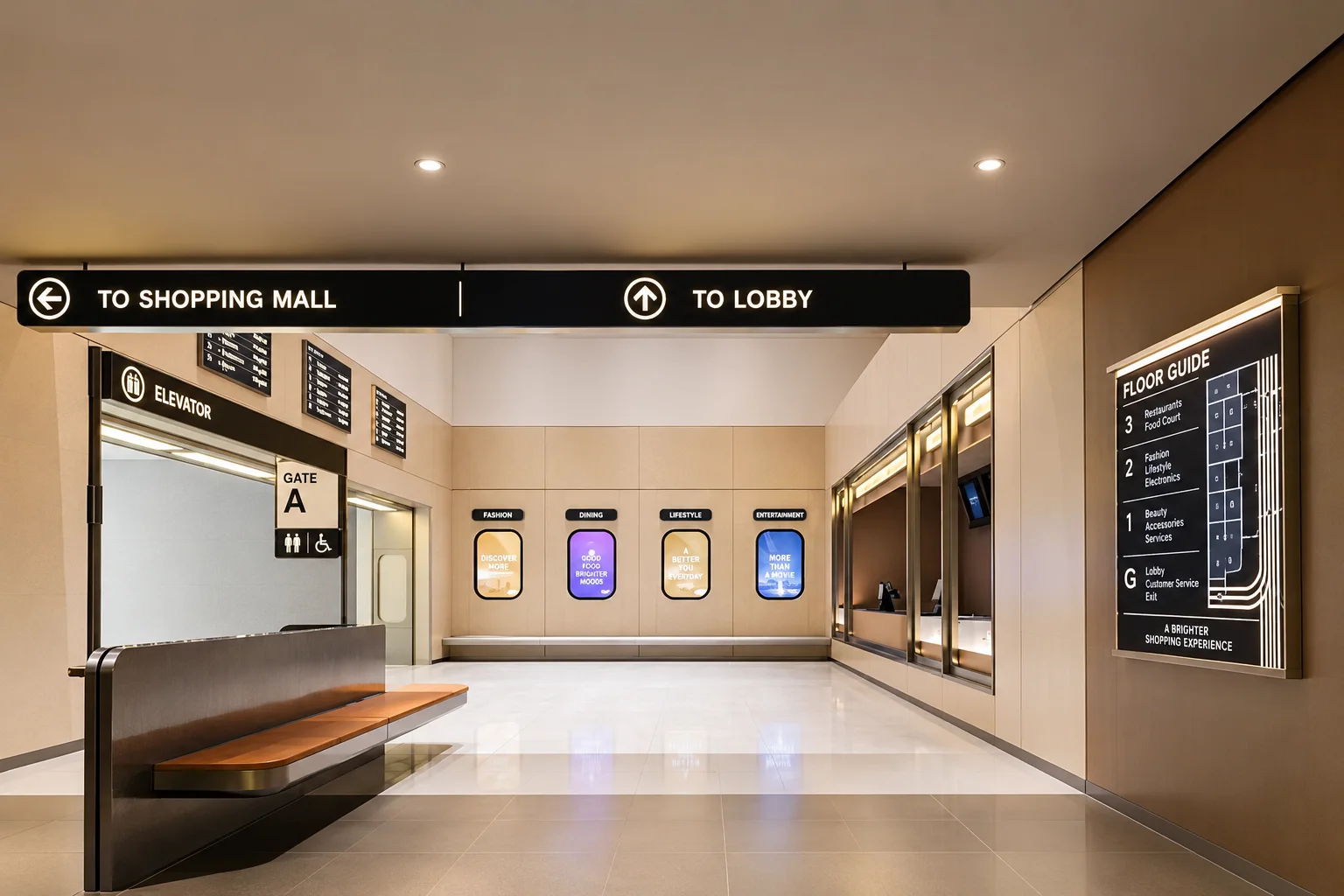
Planning signage of your own?
Get a quote→